
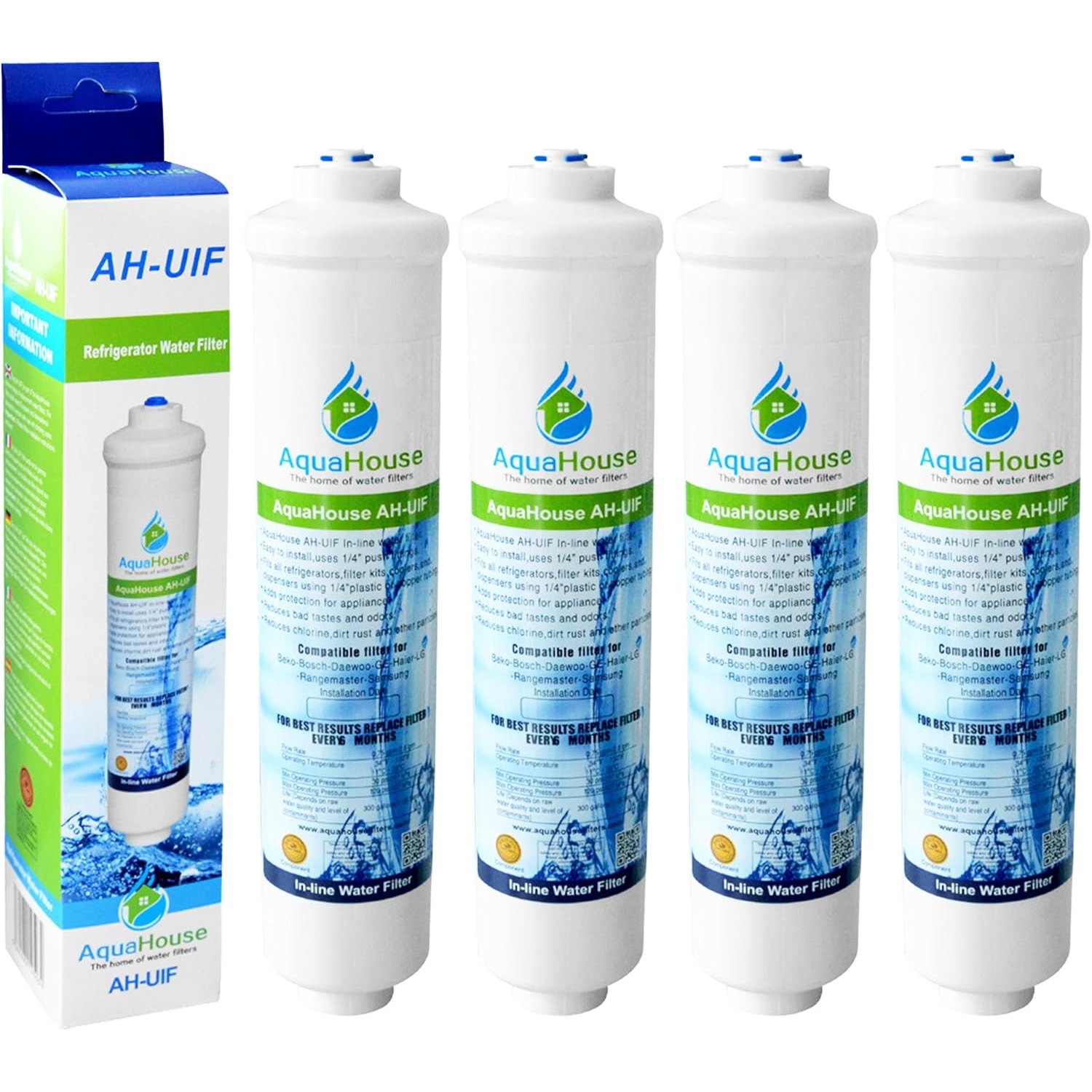

The complete guide
Inline Fridge Water Filters: A Practical Buyer's Guide
The problem with fridge water nobody mentions
A fridge with a water dispenser is a small luxury that quickly becomes normal. Cold water on tap, ice whenever you want it, no jug taking up a shelf. Then one evening you pour a glass and it tastes of the tap again, faintly chemical, slightly flat. The ice has picked up something too, and it turns up in whatever you put it in.
Nine times out of ten, the filter in the line is overdue. Not broken, just full. A filter cartridge has a finite amount of work in it, and once it has done that work it stops making a difference. Water keeps flowing, so nothing looks wrong. The only sign is the taste coming back.
That is what an inline fridge water filter is for, and why replacing it on a schedule matters more than almost any other part of looking after a plumbed-in fridge.
How an inline filter works
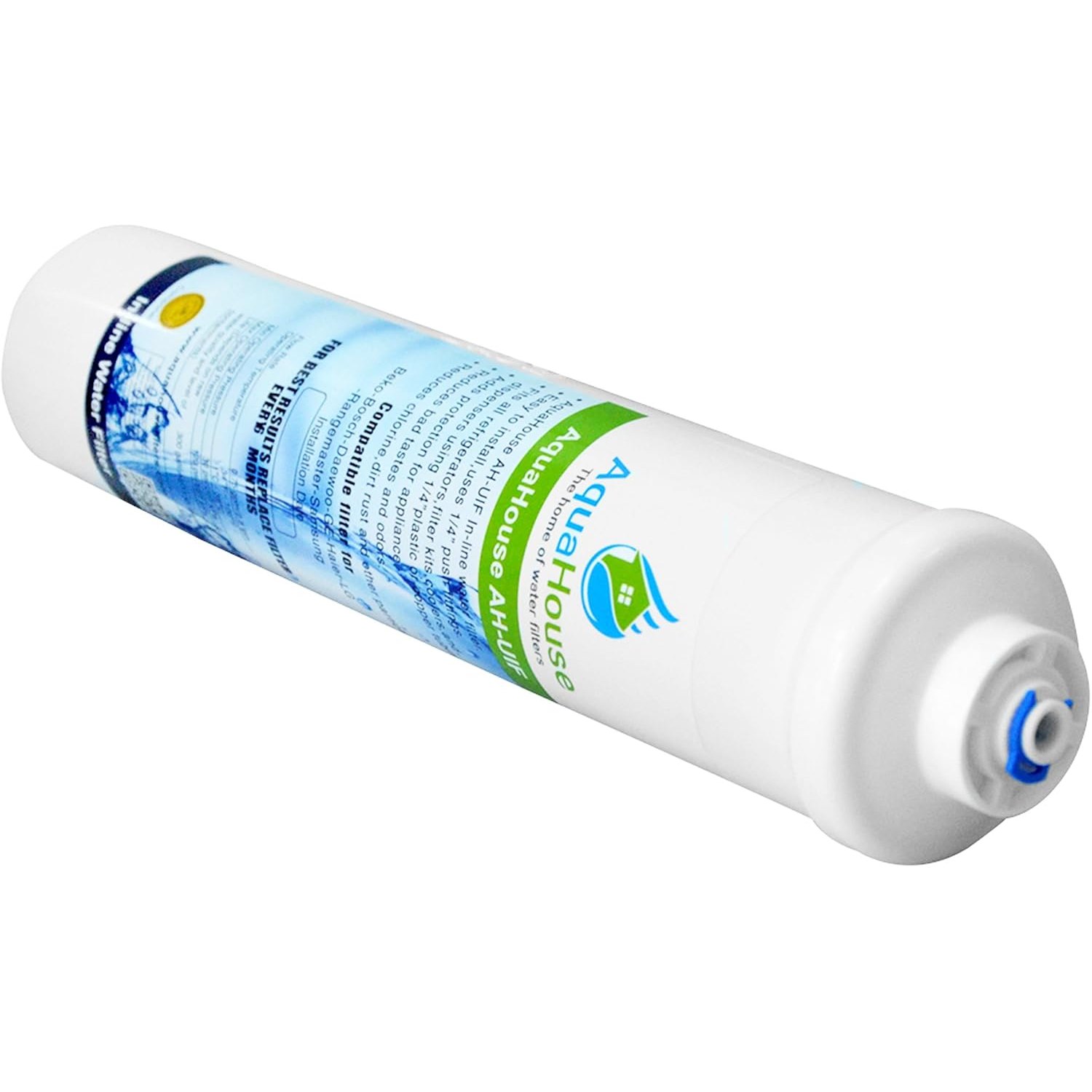
An external inline cartridge is a sealed tube spliced into the cold water pipe that runs to the back of your fridge. Water enters one end, passes through filter media inside the housing, and leaves the other end on its way to the dispenser and the ice maker.
The media is designed to reduce chlorine taste and odour and sediment. Chlorine is in town water supplies as a matter of course, and it is the main reason cold water can taste faintly of a swimming pool, particularly first thing in the morning when it has been sitting in the pipe overnight. Sediment is the fine grit, rust and scale particles that older pipework sheds over time. Pulling both out before the water reaches the tank is what makes a glass taste of nothing in particular, which is exactly what you want.
This cartridge has a polypropylene body with push-fit connectors moulded into each end. Push-fit means the pipe pushes into a collet that grips it and seals around it. No threads, no tape, no spanner. It is the reason this sort of job is a ten minute task rather than an afternoon.
One thing to be clear about. This is the external type. It replaces a cartridge sitting in the pipe behind the fridge. It does not replace a cartridge that slots into the ceiling of the fridge compartment or hides behind the kick plate at the bottom. Those are a different part entirely and are matched to the appliance.
Who this suits
It suits anyone whose fridge is plumbed in through a pipe with a cylinder already spliced into it. That setup is common on larger side-by-side fridges and on a lot of models where the maker chose to put the filter outside the cabinet rather than inside it.
It suits households that get through a fair amount of dispensed water and ice, because those are the households where a tired cartridge shows up fastest. A family making ice for a weekend barbecue notices a stale cube far quicker than someone who uses the dispenser twice a week.
It also suits people who want to stop thinking about it. Buying a single cartridge means another order in six months. Buying four means the job is covered until the fridge is well into middle age. If you are hunting for the best inline fridge water filter arrangement for a busy kitchen, the multipack is usually the answer, not a fancier cartridge.
It does not suit anyone on a private supply. This is for drinkable mains water only. If your water comes from a well, a borehole or a rainwater system, you need a different conversation with a water treatment specialist, because a taste and sediment cartridge is not the right tool for untreated water.
How to choose
Start with the pipe, not the fridge. Pull the appliance out far enough to see the water line clearly. If there is a cylinder joined into it, measure nothing yet and just note two things. Is the pipe the standard small-bore plastic type used for fridge supplies, and does the existing filter use push-fit connectors or screw fittings?
If it is push-fit, this cartridge connects directly, because the connectors are part of the cartridge body and no additional fittings are required. The important detail is that you disconnect the old filter and the old connectors from the pipe. Do not try to reuse the previous fittings. Cartridge size and connector layout vary between filters, and the whole point of built-in push-fit ends is that you are starting clean.
Next, think about the schedule rather than the spec sheet. The filter life here is six months. That is the number to work to. People searching for the best external fridge filter often get drawn into comparing capacities, but a cartridge replaced on time will always outperform a bigger one left in for two years.
Finally, think about access. If your fridge is wedged into a tight run of units, the filter will be awkward to reach. Position it on the pipe where you can actually get to it, with enough slack to pull the cartridge forward when you swap it. Future you will be grateful.
Fitting it without drama
Turn the water supply to the fridge off first. Then run the dispenser for a few seconds to drop the pressure in the line. Skipping that step is how people end up with water across the kitchen floor.
Release the pipe from the old filter at both ends and remove the old connectors entirely. Check the pipe end. If it is scuffed, crimped or out of round, trim it back square with a proper pipe cutter so it will seat cleanly. Then push the pipe firmly into the new cartridge until it stops, and give it a gentle tug to confirm it has gripped.
Watch the direction. Inline cartridges are marked to show which way the water should flow, and the arrow points towards the fridge. Fitting one backwards is an easy mistake and it will not do the job.
Turn the supply back on slowly, then stand and watch both joints for a minute. A drip that appears now is far easier to fix than one that appears behind a fridge at two in the morning. Finally, flush the cartridge by running the dispenser until the water is clear and the sputtering stops. Throw away the first batch of ice. All of that is normal with any new filter.
Care and the six month rhythm
There is very little to care for. The cartridge is sealed and disposable, so there is nothing to wash, rinse or take apart. The maintenance is simply the replacement.
Mark the fitting date on the body with a permanent marker the moment you install it. That single habit is worth more than any reminder app, because the date is sitting right there on the part when you next pull the fridge out. A repeating calendar alert as a backup does no harm.
When the six months are up, repeat the process. Supply off, pressure released, old cartridge out, new one in, flush through. It gets faster every time. With four cartridges in the pack, you have four of these appointments spread over two years before you need to buy again.
Store the spares somewhere cool and dry, in their packaging, out of direct sunlight and away from small hands. A kitchen cupboard is fine. There is no need to keep them cold.
The short version
If your fridge is fed by a pipe with a cylinder in it, this is the cartridge that goes in that pipe. It is designed to reduce chlorine taste and odour and sediment in drinkable mains water, it has push-fit connectors built in so no extra fittings are needed, and each one lasts six months.
Check behind the fridge before you order, because an internal cartridge is a different part and this will not replace it. Fit it with the arrow pointing at the fridge, flush it properly, and write the date on the body.
Then forget about it for six months, which is really the whole point.