

The complete guide
Tap Water Filters: A Practical Buyer's Guide
The problem with the glass of water you just poured
Nobody thinks about tap water until they taste it. Then it is all you can think about. There is that faint chemical edge after the water board has done its seasonal flush, or the slightly dusty note in a kettle that has not been emptied, or a jug of water on the dinner table that everyone politely ignores.
Chlorine is usually the culprit for taste and smell. It is there for good reason as part of how mains water is treated, and it does its job before the water ever reaches your kitchen. The downside is that your nose and tongue are very good at noticing it, especially in cold water and especially in tea.
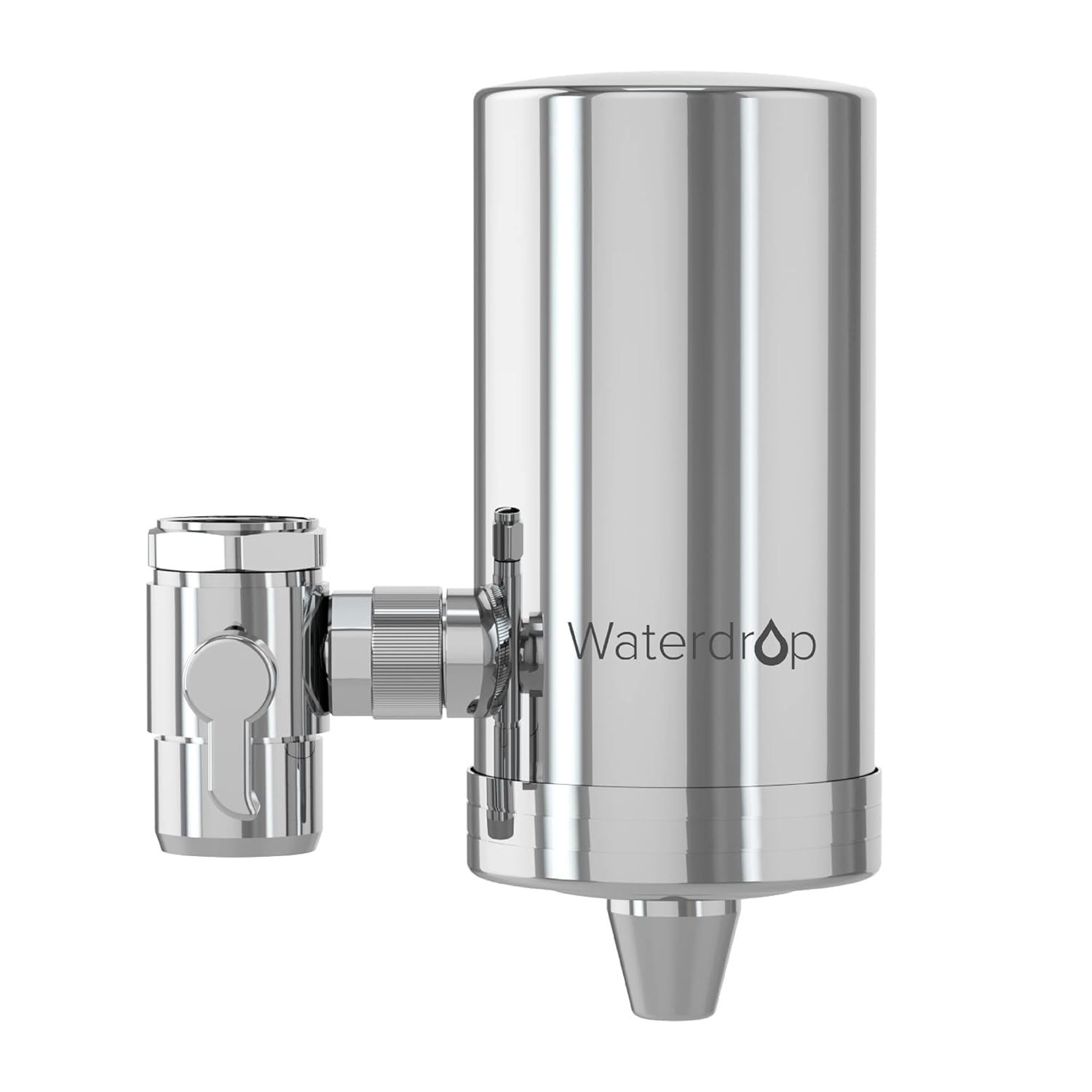
A tap water filter deals with that at the last possible moment, right at the spout. This one uses activated carbon and is designed to reduce chlorine taste and odour along with sediment from drinkable mains water. It is not doing anything dramatic. It is making the final metre of the journey taste better.
How a tap-mounted carbon filter actually works
The mechanics are simple enough that the whole thing runs with no power at all. Water arrives at the spout under mains pressure, passes through the filter housing, moves through the carbon media inside the cartridge, and comes out the other end.
Carbon works by adsorption. The media has an enormous amount of internal surface area, and certain compounds in the water stick to it as they pass through. Contact time matters, which is why filtered water comes out a little slower than it would from a bare tap. The listed maximum flow here is 0.5 gallons per minute, about 1.9 litres per minute. In practice that is a decent pour for a glass and a slightly patient wait for a large jug.
This cartridge also includes what the maker describes as additional mineralisation filtration media alongside the carbon. Beyond the name, the details are not specified by the maker, so treat it as part of the filtration stack rather than a headline feature.
The system runs within a pressure range of 15 to 100 psi, roughly 1.0 to 6.9 bar. That covers the great majority of mains-fed homes. It also has a temperature ceiling of 100.4°F, which is about 38°C, so this is a cold-water device. Hot water and carbon media do not mix.
Who this suits
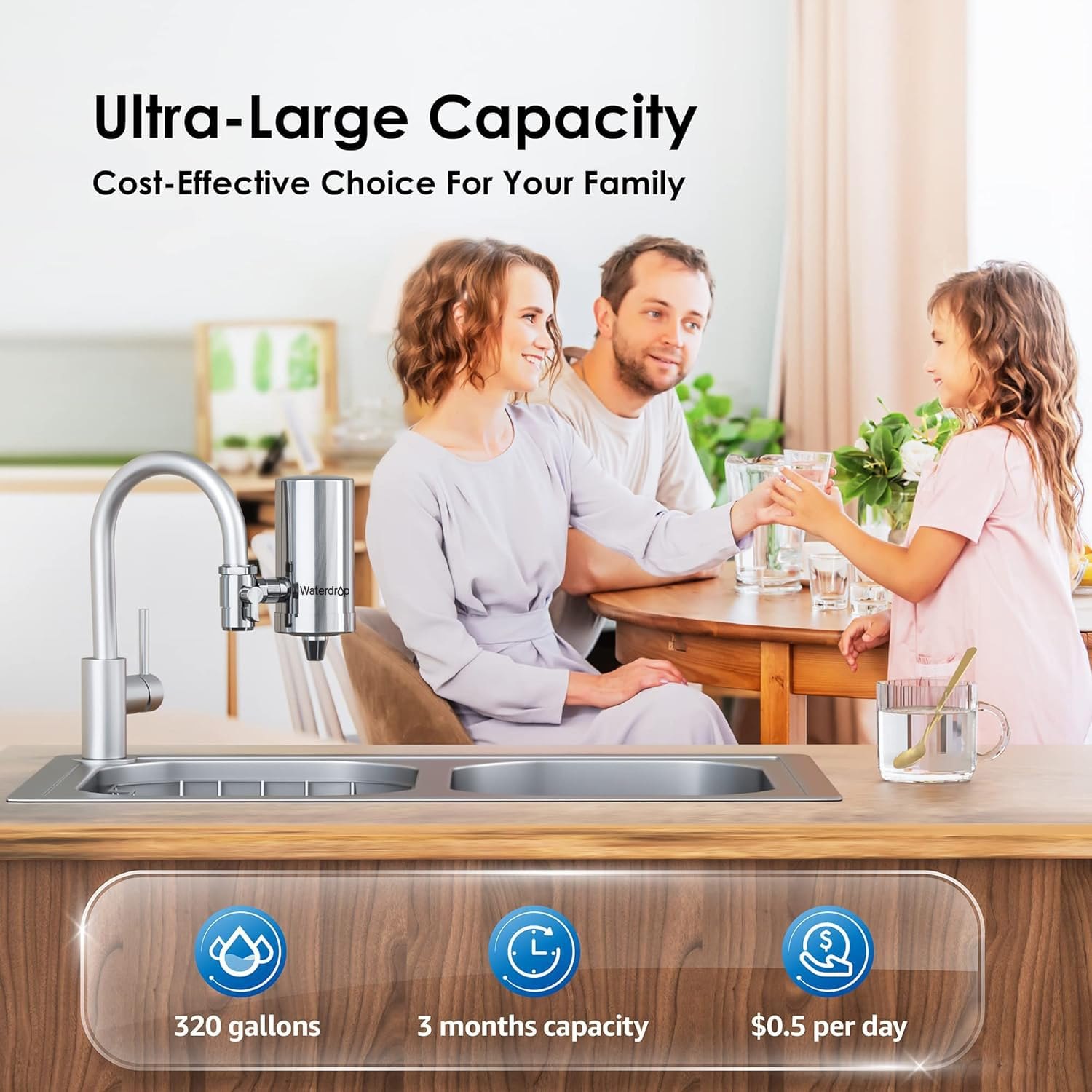
Renters are the obvious group. Nothing is drilled, nothing is cut and nothing is plumbed in. You unscrew the aerator at the tip of your tap, fit the adapter, screw the filter on and you are done. When you move, you reverse the process and put the original aerator back. Anyone searching for the best tap water filter for renters is essentially looking for exactly this arrangement.
Small kitchens are the second group. A jug filter takes up fridge space and needs refilling at the worst possible moment. An under-sink system needs cupboard room and a bit of plumbing confidence. This unit lives on the tap itself and measures 13.2 by 5.9 by 10.5 centimetres, so it borrows no worktop at all.
Then there are the people who simply drink a lot of water and are tired of the taste. If you are getting through several litres a day, the one-litre jug in the fridge becomes a chore. A filter at the tap means filtered water whenever you reach for it.
Caravans and motorhomes work too, as long as the tap is a standard threaded one and the onboard pressure sits inside the stated range. Check the clearance between spout and basin first, because small sinks are tight.
The fit question, which is the one that matters most
More tap filters get returned for fit than for any other reason, so spend a minute on this before anything else.
This unit is made for standard threaded taps. The giveaway is the aerator, the little insert at the very end of the spout that breaks the stream into a soft column. If you can unscrew that by hand or with a cloth for grip, you are almost certainly in business.
What will not work: pull-out taps, hand-held spray heads, spray-style taps and sensor taps. Those have no standard thread to grip, or they have a hose assembly behind the head that a filter cannot attach to. A tap with a built-in filtered water outlet is also not a candidate.
If your tap looks borderline, take the aerator out and look at the thread. Compare it against the adapter options shown in the product images and instructions. Thirty seconds of checking saves a return.
Installing it without the drama
Turn the tap off. Unscrew the existing aerator from the spout, turning it anticlockwise as you look up at it. A cloth helps if limescale has made it stiff. Put that aerator in a drawer, because you will want it again one day.
Pick the adapter that matches your thread, fit it, then screw the filter unit on. Hand tight is usually right. Run the tap for a short while before you fill the first glass, which flushes loose carbon dust out of a new cartridge. That first bit of water may look slightly grey, and that is normal for any new carbon filter.
The 360° rotating head is worth playing with once it is on. Swing the outlet towards the back of the basin for washing up, forward for filling a bottle, sideways for a pet bowl. It is a small thing that quietly removes a daily annoyance.
Looking after it
Wipe the stainless steel housing with a soft damp cloth and dry it. Avoid bleach, scouring pads and anything gritty, all of which will leave marks on the finish.
The cartridge is rated for about 1,211 litres or three months, whichever comes first. A household of four will hit the volume figure well before the three months are up. A single person may reach three months with litres left over, in which case the calendar wins, because carbon that has been sitting damp for a long stretch is past its best.
Set a reminder when you fit a fresh cartridge. If you prefer physical cues, a drop in flow or a shift in taste both tell you the same thing.
One more point on gaps. If the filter has gone unused for a couple of weeks, holidays being the usual reason, run the tap briefly before filling a glass. And note that an unused unit still in its packaging has a listed shelf life of 80 days, so fit it reasonably soon after it arrives rather than storing it for a year.
What a filter like this does not do
Worth being clear. This is a carbon filter aimed at taste, odour and sediment in drinkable mains water. It is not a water softener and will not stop limescale in your kettle. It is not designed for untreated sources such as wells or rainwater collection, and it is not a replacement for a mains supply that is already safe to drink.
If your concerns go beyond taste, the right answer is a conversation with a water specialist and, where relevant, a test of your actual supply. A tap filter is an improvement to drinking water you already have, not a solution to a supply problem.
Comparing it against the alternatives
A filter jug costs less up front and needs no fitting at all, but it takes fridge space, needs refilling, and gives you filtered water only when someone has remembered to fill it. For one person who drinks a glass or two a day it is fine.
An under-sink system gives you higher capacity and a dedicated tap, but it means cupboard space, a tee into the cold feed and in most cases a drill through the worktop. That is not a renter's project.
A tap-mounted unit sits between the two. You get on-demand filtered water without the install, at the cost of a slower flow and a cartridge that needs changing every three months or so. For most flats, small kitchens and short leases, that trade is a sensible one.
The short version
If your tap has a standard aerator you can unscrew, this fits. It is stainless steel, measures 13.2 by 5.9 by 10.5 centimetres, needs no power and no tools, and the head swivels a full circle so the flow goes where you want it.
The carbon cartridge is designed to reduce chlorine taste and odour plus sediment from mains water, and it is rated for about 1,211 litres or three months. One filter comes in the box. Keep the water cold, keep the housing wiped, and change the cartridge on schedule.
The only thing to check before you buy is your tap. Standard threaded spout, yes. Pull-out, spray or sensor, no. Get that right and the rest is a five-minute job.