
The complete guide
How To Choose A Gravity Water Filter For Your Kitchen
The problem with perfectly good tap water
Mains water in most towns is already treated and tested before it reaches your kitchen. The issue people actually complain about is rarely safety. It is taste.
Chlorine is used widely in water treatment, and a small residual amount stays in the supply all the way to your tap. Some people never notice it. Others pick it up straight away, especially in a glass of cold water or a mug of tea made with freshly run water. Older pipework in a house or a street can add a bit of grit or a faint metallic edge too.
That is the gap a countertop water filter fills. It is not trying to rescue a bad supply. It is trying to take an acceptable glass of water and make it one you actually want to drink.
How a gravity filter works
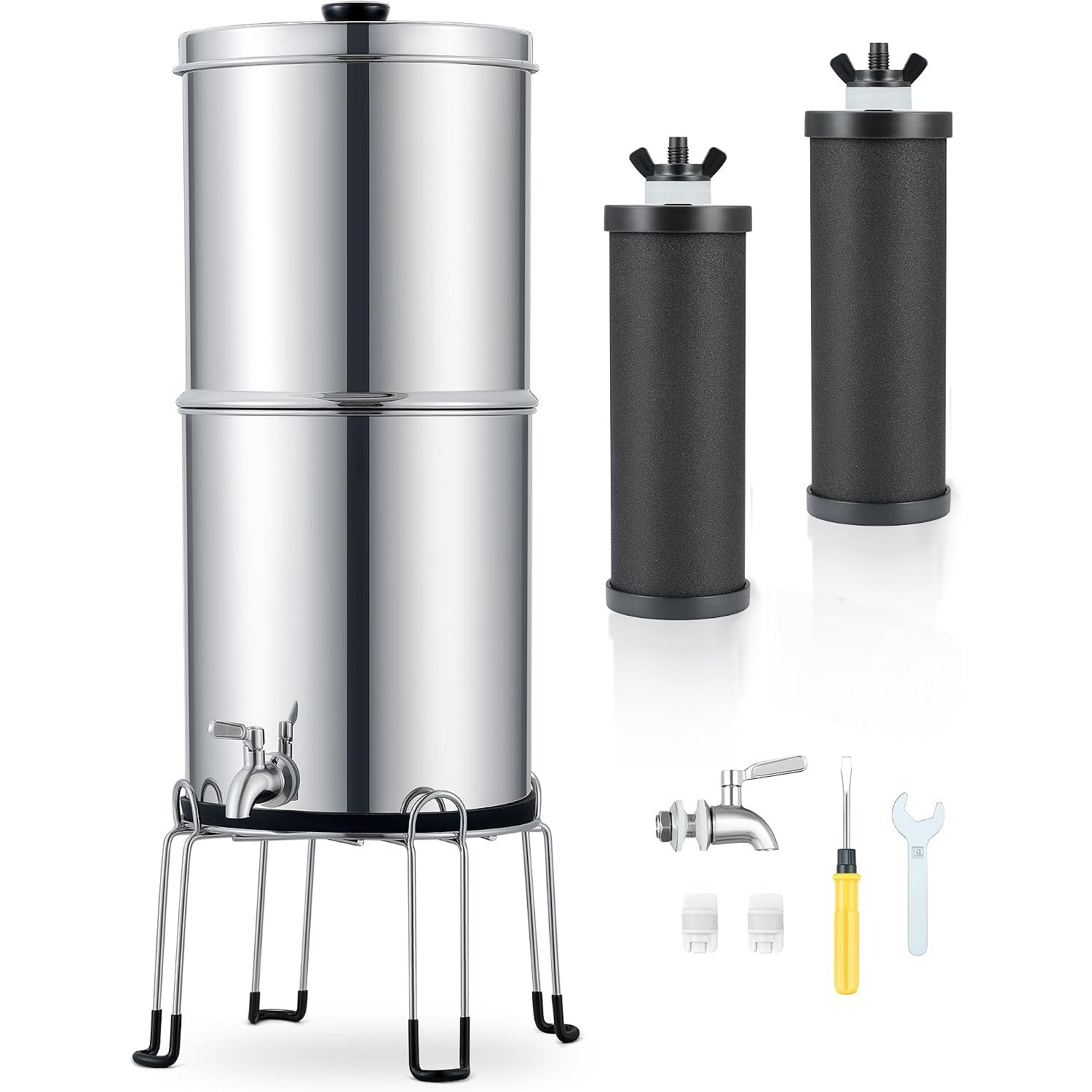
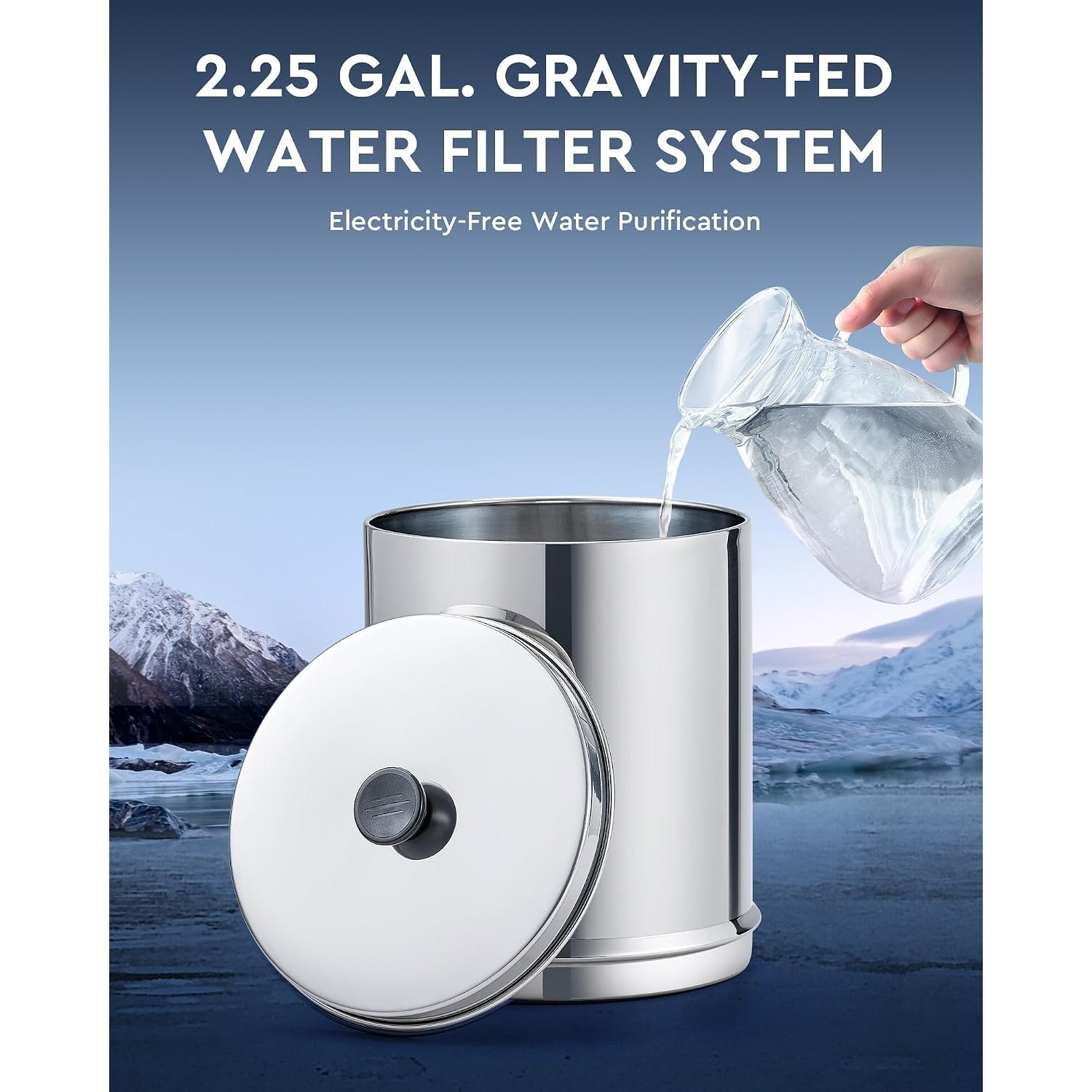
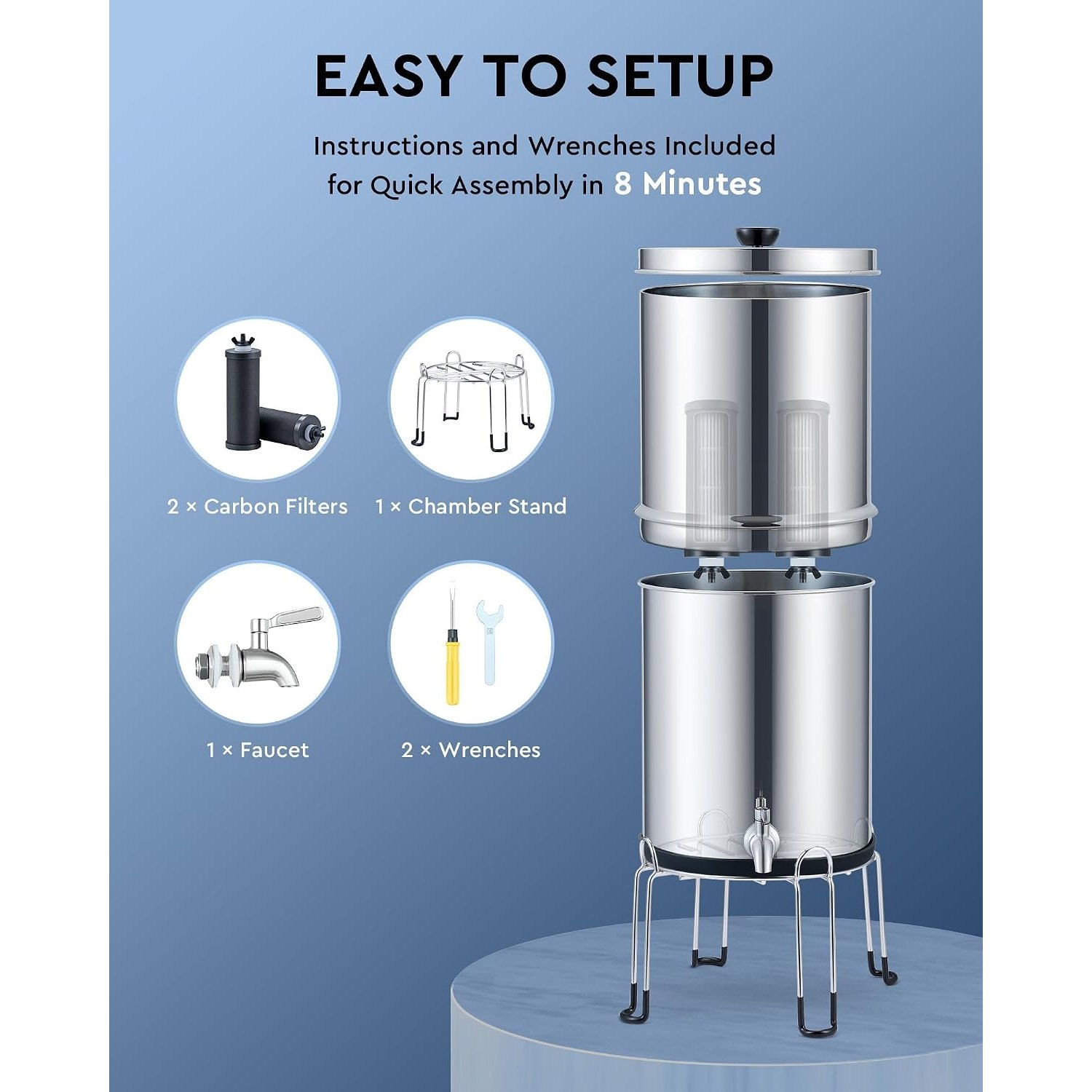
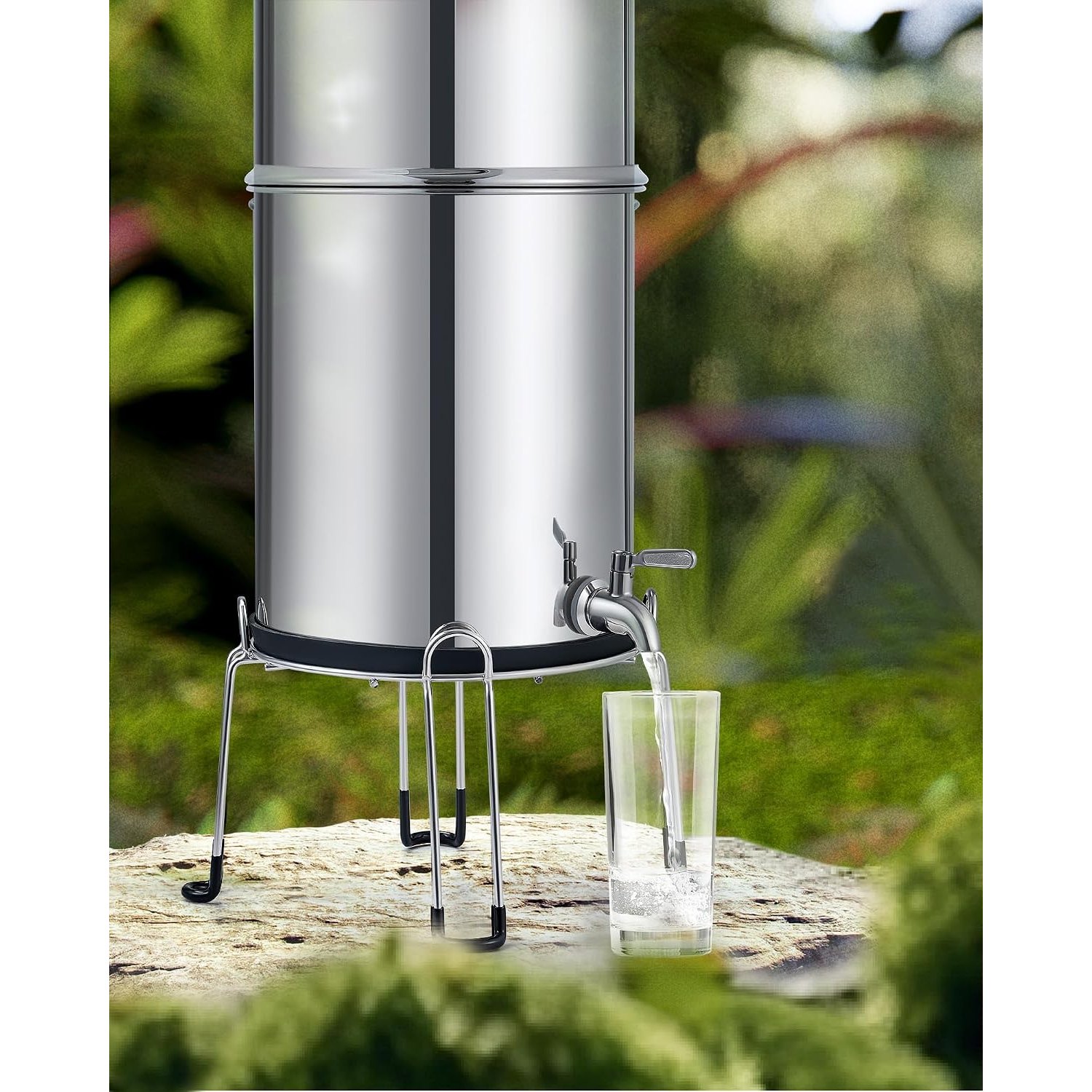
The mechanics here are about as simple as household appliances get. There are two stainless steel chambers. The top one holds unfiltered water. Cartridges sit between the two chambers. Water moves down through those cartridges because of gravity, nothing else, and collects in the lower chamber. A small tap on the front lets you pour.
The cartridges in this system use activated carbon made from coconut shells. Activated carbon is treated so its internal structure becomes extremely porous, which gives a small amount of material a very large surface area. As water drifts past slowly, substances that cause chlorine taste and odour cling to that surface. Mechanical filtration handles the physical side, catching sediment and larger particles before they reach your glass.
Slow is the point. Water that races through carbon spends less time in contact with it. Gravity gives you a gentle, unhurried flow, which is why gravity filters are usually filled and left rather than used on demand.
One thing worth saying plainly: the filter element does not reduce TDS. If you own a TDS meter and expect the number to drop, it will not. TDS measures dissolved solids of all kinds, including the ordinary minerals that make water taste like water. A low reading is not a quality score, and a carbon filter aimed at taste and odour is not designed to move it.
Who this suits
Renters top the list. No plumbing is touched, no holes are drilled, nothing is fitted to a tap. You set it on the worktop and that is the installation finished. When the lease ends, it comes with you. For anyone shortlisting the best water filter for renters, that alone usually settles it.
It also suits people who want filtered water during a power cut. Plumbed systems and electric dispensers both stop when the electricity does. Gravity does not.
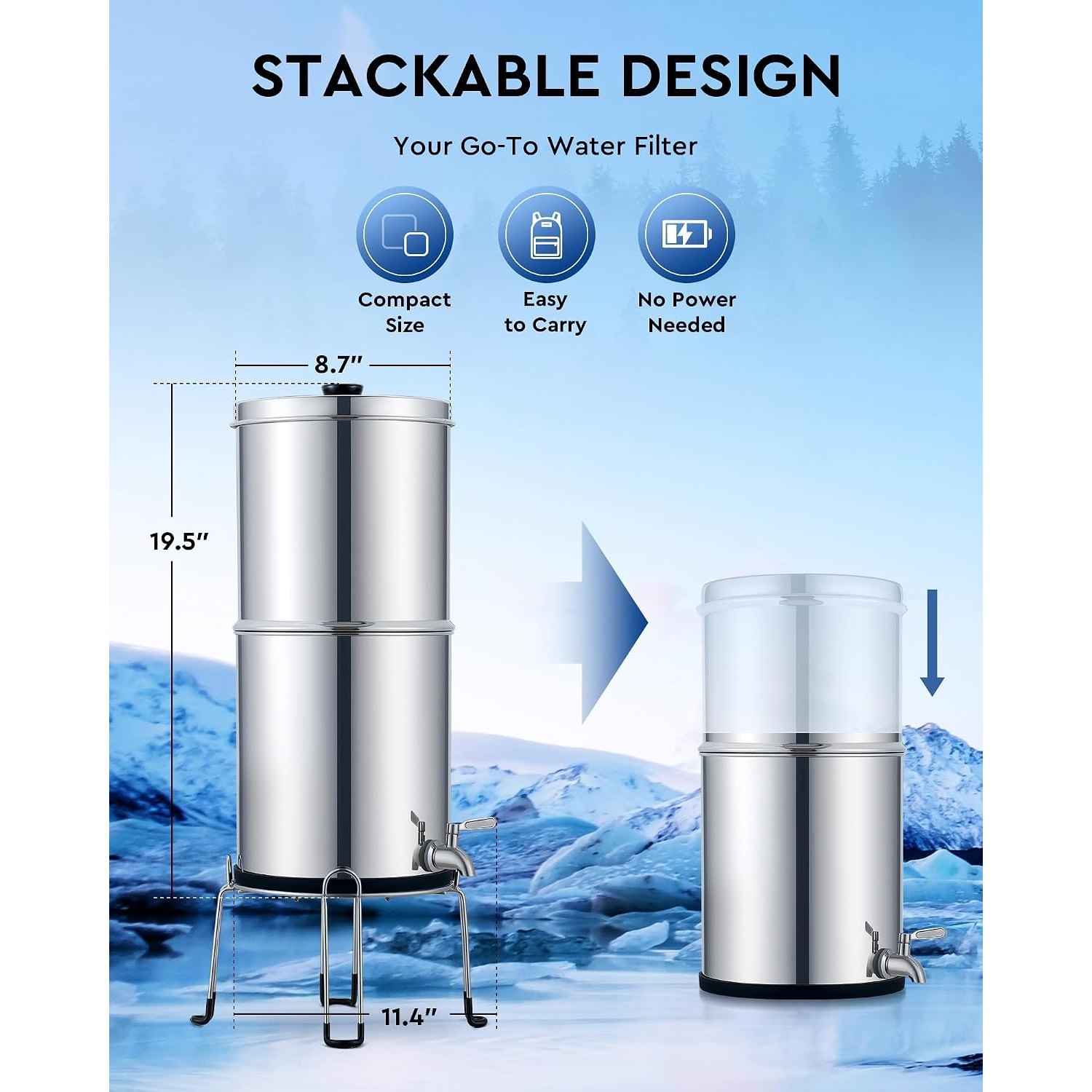
Caravans, campervans and holiday lets are a natural fit too. The chambers stack for storage and the empty weight is 3.5 kg, which one person can carry comfortably. If you are looking at the best portable water filter system options, just remember this one is intended for drinkable mains water. It belongs on a serviced pitch or at a holiday house, not beside a river.
Families get good value from the capacity. At 2.25 gallons, roughly 8.5 litres, there is enough in the lower chamber for cooking, drinks and bottle refills without someone refilling it every hour. Among the best family water filter choices, capacity tends to matter more than any other single spec.
Working out whether it fits
Measure first. The unit is 24.5 x 34 x 24.5 cm, and that 34 cm width is the number that catches people out on a narrow worktop. Height matters too, because you need clearance above the lid to pour a jug or a kettle of water into the top chamber. If you have wall cupboards sitting low over the bench, check the gap before ordering.
Think about where the tap will sit. You want a glass or a water bottle to fit underneath, which usually means the unit sits with the tap just over the front edge of the worktop or on the included chamber stand. Near a sink is sensible, because the occasional drip is easier to live with there.
Finally, check your supply. The system supports water up to 300 ppm TDS. Most mains supplies sit comfortably below that, but if you are in an area known for very hard or mineral-heavy water, a quick check with your supplier is worth the five minutes.
What a gravity filter will not do
This matters as much as the list of things it will do. A carbon filter is a taste and sediment product. It is not a water softener, so it will not stop scale forming in your kettle. It will not change the mineral profile of your water in any meaningful way, because TDS stays where it was.
It also assumes you are starting with water that is already treated and drinkable. The whole category of gravity dispensers is built around improving the drinking experience of mains water, not around making untreated water usable.
If you need something different from that, a different product category is the honest answer.
Living with it day to day
The routine settles quickly. Most households fill the top chamber in the evening, and by morning the lower chamber is ready. Through the day you top up the top chamber whenever you think of it.
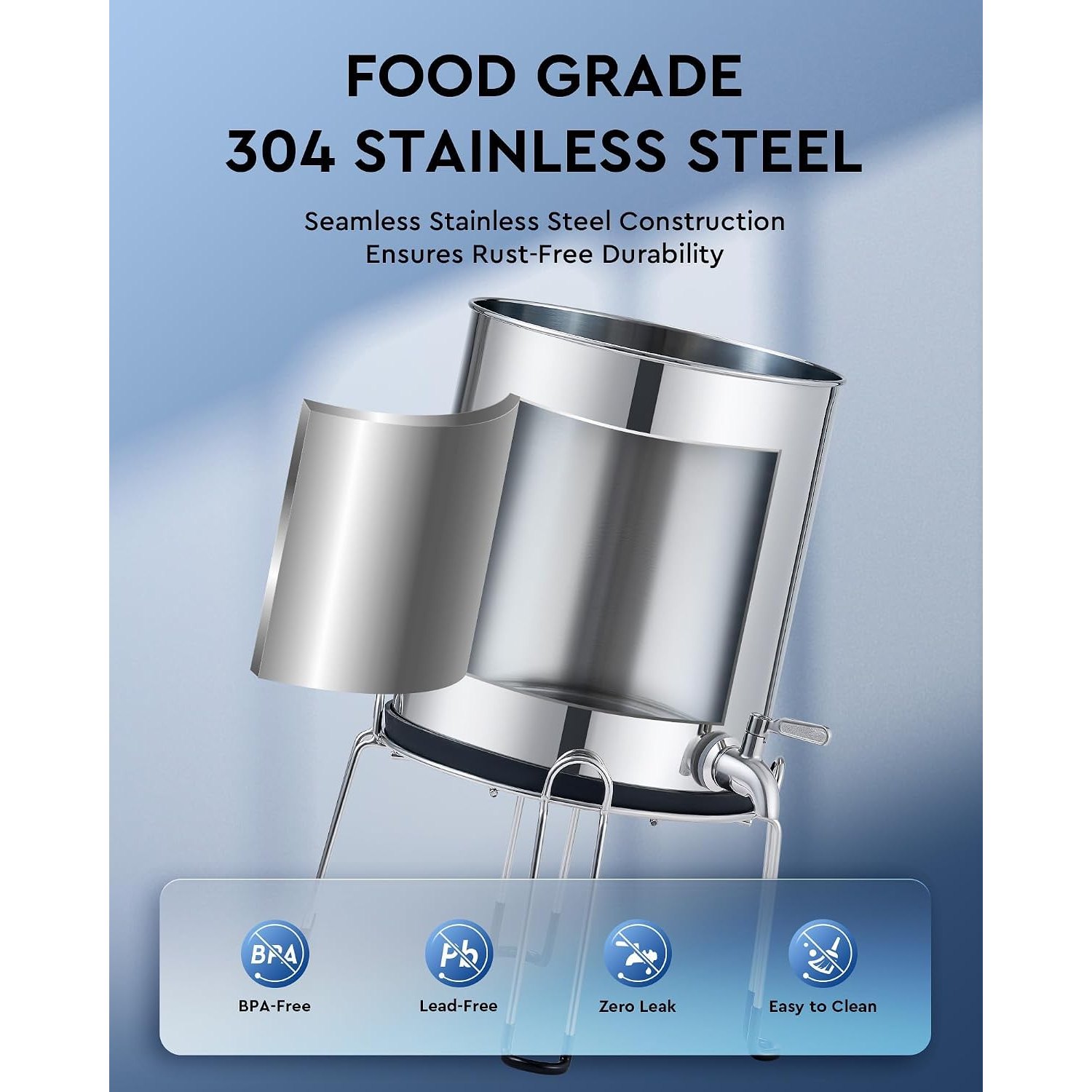
Cleaning is light work. Warm water and a soft cloth on the stainless steel, inside and out, every so often. Avoid abrasive pads, bleach and the dishwasher. Stainless steel keeps its finish far longer if you treat it gently, and there is nothing in ordinary use that calls for anything harsher.
Cartridge changes follow the maker's schedule, which comes with the unit. The pack includes two cartridges, so you have a spare from day one. Keep it dry and dust-free until it is needed. Beyond the printed schedule, a noticeably slower trickle or the return of a chlorine note in a cold glass are the practical cues that it is time to swap.
If the filter is going to sit idle, say while you are away for a fortnight, empty both chambers, take the cartridges out and let the metal dry properly. Standing water in a sealed chamber is best avoided.
Comparing against the alternatives
A jug filter is cheaper and smaller, but it holds a fraction of the water and the plastic body picks up scratches and smells over time. A plumbed under-sink system filters on demand and never takes up worktop space, but it needs an installer, a spare hole in the sink or worktop, and a landlord who says yes.
A stainless steel gravity water filter sits between those two. More capacity than a jug, no installation like an under-sink unit, and a metal body that stands up to daily handling better than plastic. For people weighing the best benchtop water filter options, that balance is usually what tips it.
The short version
If your mains water is drinkable but tastes of chlorine, a gravity fed filter system is a direct, low-fuss fix. This one gives you 304 stainless steel chambers, coconut shell carbon cartridges, about 8.5 litres of capacity and a spare set of filters in the box.
No power, no plumbing, no landlord conversation. Measure your worktop, check the 24.5 x 34 x 24.5 cm footprint fits, fill it, and let gravity handle the rest.