



The complete guide
Choosing a Fridge Door Water Filter Jug - A Practical Buyer's Guide
The problem with most filter jugs
Filter jugs have a design flaw that nobody mentions in the adverts. They are wide. Classic jug shapes were drawn for a worktop, where sprawl does not matter much, and the result is a jug that will not stand in a fridge door and takes up an awkward amount of a fridge shelf if you lie it down.
So the jug ends up on the counter. Which means the water is room temperature. Which means when you actually want a cold drink you reach for something else, and the jug slowly becomes an ornament that needs cleaning.
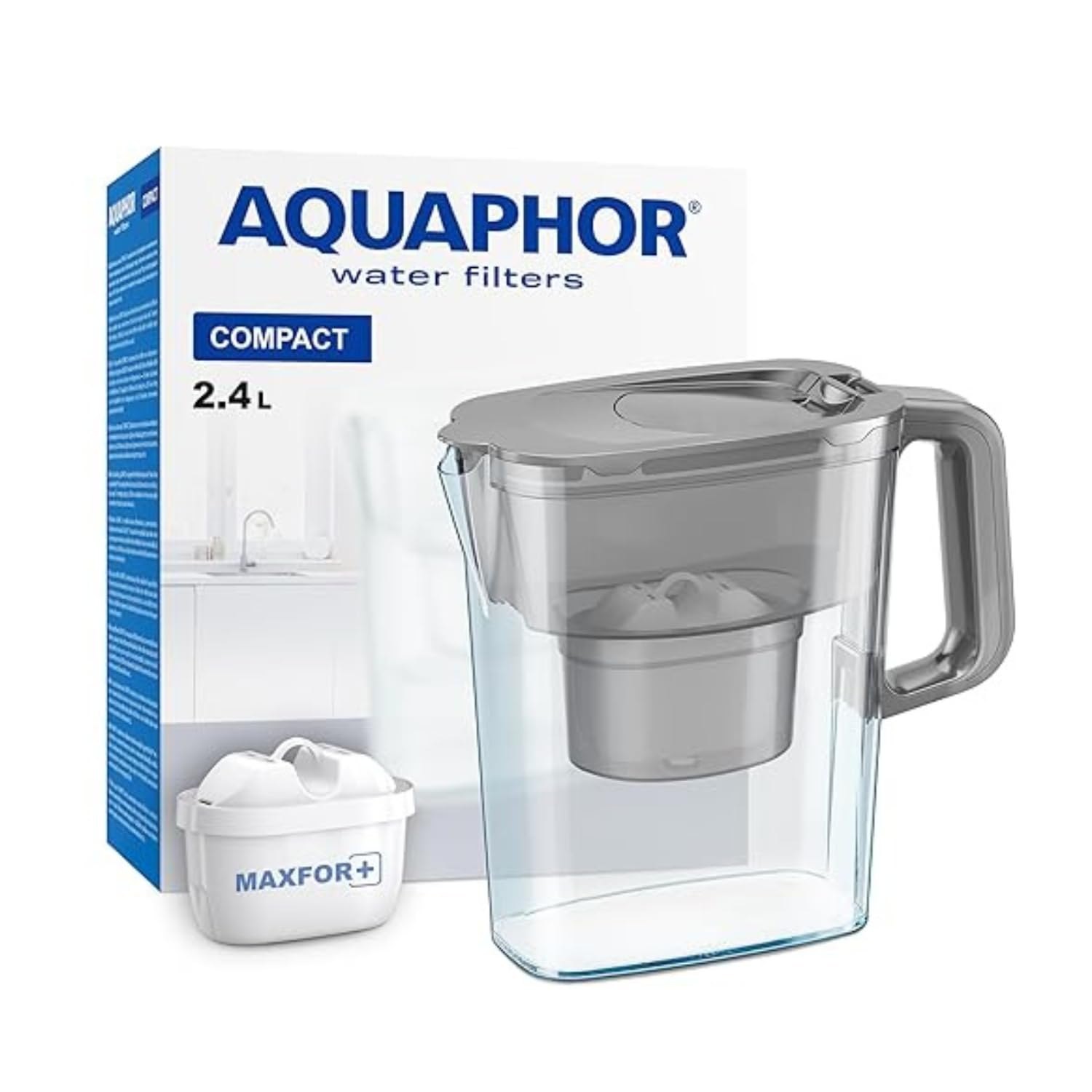
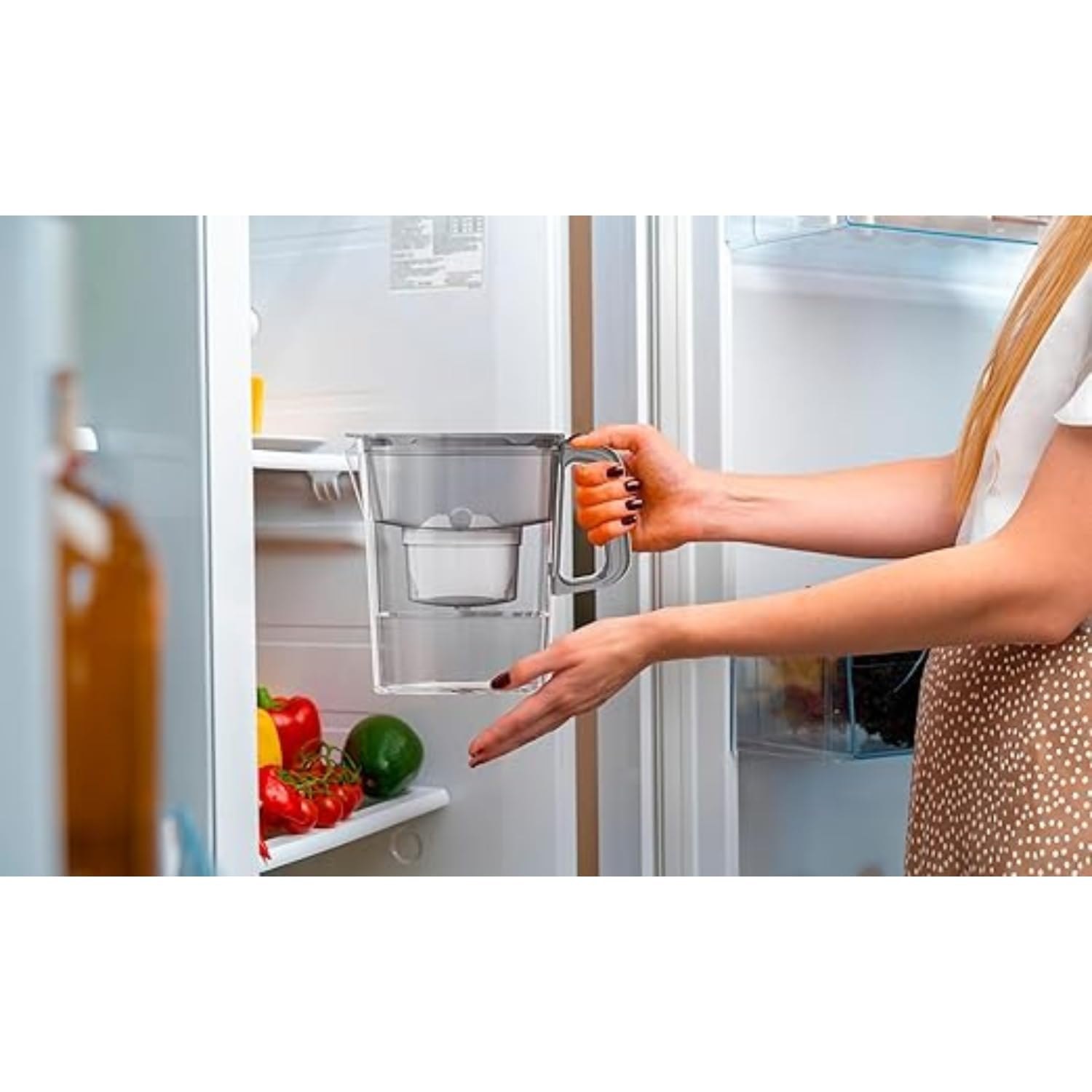
A narrow jug fixes this in the dullest possible way. At about 10.5cm wide, this one stands upright in the door where the tall bottles go. Water stays cold, the counter stays clear, and the jug gets used because it is in the place you already open twenty times a day.
How a gravity filter jug works
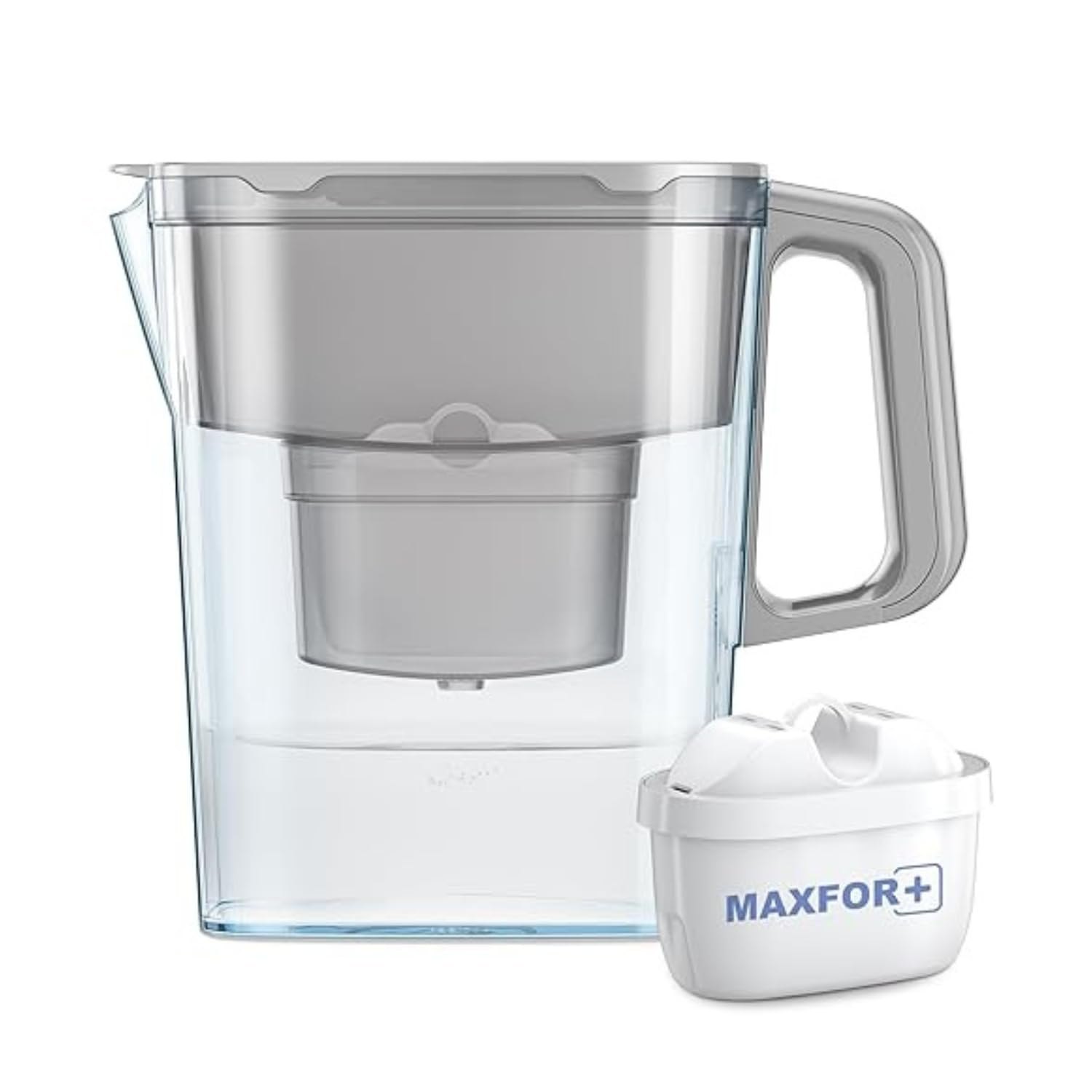
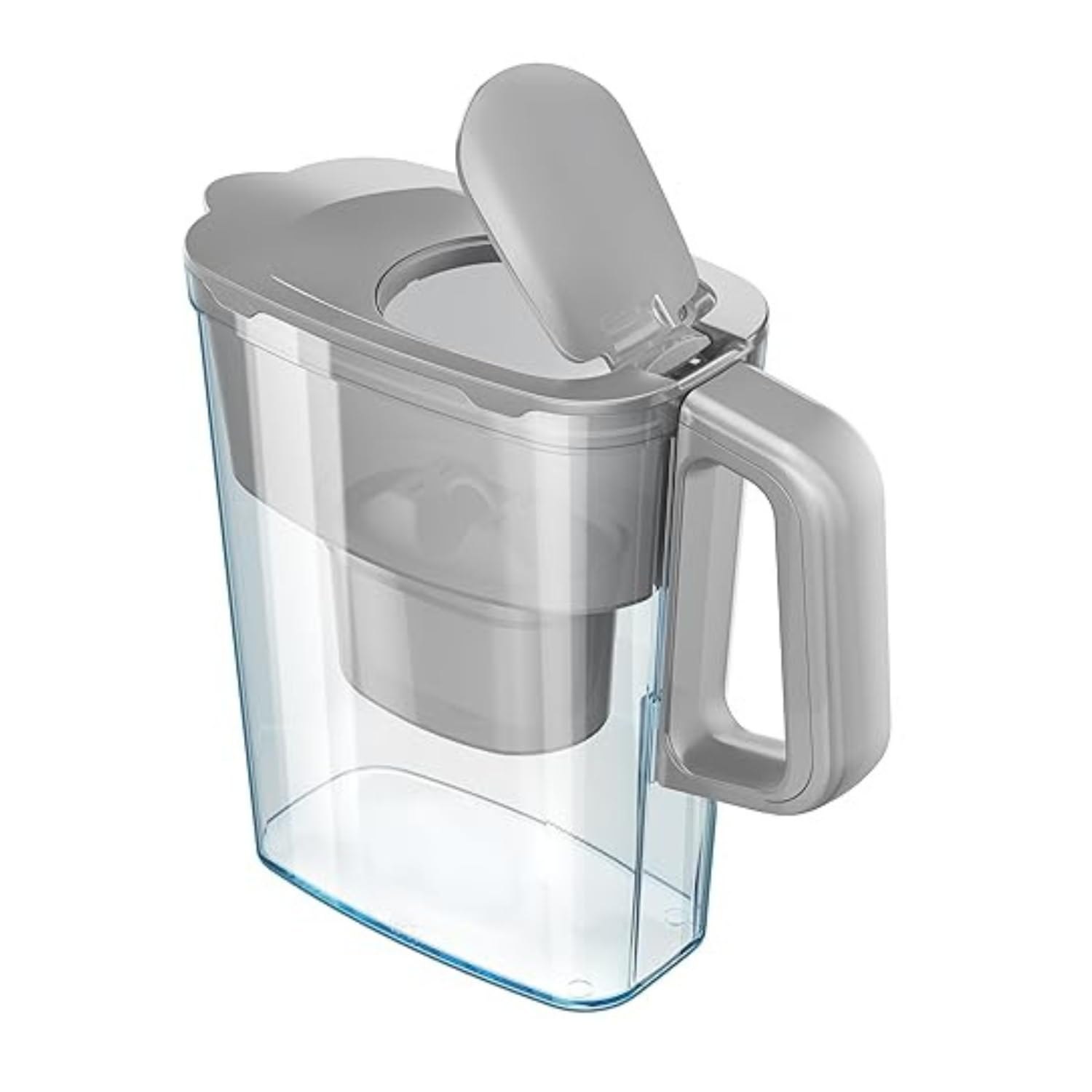
There is nothing clever going on mechanically, and that is a strength. You pour tap water into the upper reservoir. Gravity pulls it through the cartridge sitting between the two chambers. Filtered water collects below, ready to pour.
No power. No plumbing. No pressure fittings or tools. If it breaks, the worst that happens is you have a jug and need a new cartridge.
The cartridge in this jug is a Maxfor+ unit that uses ion exchange media. It is designed to reduce chlorine taste and odour and sediment in drinkable mains water. That is a taste job, not a treatment job, and it is worth being clear about the difference. A jug filter is for water that is already supplied to you as drinking water. It is not a way to make an unknown or untreated supply drinkable, and it should never be used that way.
The flow is slow by design. Water needs contact time with the media. If you want a glass immediately, pour from the filtered chamber and refill the reservoir afterwards, so there is always a batch working its way down.
Who this size actually suits
2.4 litres is a specific decision, not a compromise. It covers:
- One person comfortably, with one refill a day
- Two people who drink a normal amount of tea, coffee and water, with a couple of refills
- A desk-side setup, where a 2.4 litre water jug lives in a small office fridge
- A student room or bedsit with a mini fridge
Where it will struggle is a family of four who all want cold water at dinner time. At that point you are refilling constantly and a larger worktop jug makes more sense, even with the space it eats. Be honest about your household before you buy, because an undersized jug is more irritating than a slightly bulky one.
The other group this suits well is anyone who shares a kitchen. A slim filter jug for small kitchens does not provoke the passive-aggressive notes that a sprawling one does, because it is not occupying communal shelf space.
Measuring before you order
This is the step people skip and then regret. Fridge door shelves are not standardised, and the deep bottle shelf on one model is a shallow condiment rail on another.
Take three measurements from the shelf you intend to use. Width available between the dividers, depth from the door panel to the retaining lip, and clear height above the shelf floor. Compare those against 10.5cm wide, 24.8cm front to back and 22cm tall.
Give yourself a centimetre or so of margin on height, since you need to lift the jug up and over the retaining lip to get it out. If the depth is tight, check whether the door will still close with the jug in place. Nothing ruins a purchase faster than a jug that fits the shelf but stops the seal closing.
If it does not fit, it still works perfectly well on a worktop. You just lose the chilling benefit that made the narrow shape appealing in the first place.
Living with the flip-top lid
Small feature, large daily difference. The lid has a hinged section you can lift with one finger, so refilling means holding the jug under the tap and flicking the flap open. The full lid stays put.
Try doing that with a lift-off lid while holding a full jug in your other hand and you will understand why this matters. The lid ends up balanced on the draining board, gets knocked into the sink, and over a few months that becomes the reason the jug stops being used.
The trade-off is that the lid needs hand washing. Dishwasher heat and jets are hard on hinges and seals. The jug body and reservoir can go in the machine quite happily, so it is only the one part you wash in the sink.
Cartridges, timing and honesty
The maker rates the included Maxfor+ cartridge at up to 200 litres or about 60 days of typical use. Whichever you hit first is the one that counts. A single person will usually run out of days before litres. A busy shared kitchen will do the opposite.
Note the fitting date. Write it on a sticker, put it in your phone, or mark the calendar. Relying on taste to tell you is unreliable, because the change happens gradually and your palate adjusts along with it.
New cartridges need soaking and rinsing before they go in, following the instructions supplied with the filter. The first jug or two of filtered water is normally discarded. Skipping this step is the usual cause of the "my new filter is really slow" complaint.
Keep a spare cartridge in the cupboard. A filter jug with an expired cartridge in it is just a jug.
Cleaning and keeping it fresh
Rinse the jug once or twice a week with warm water. Give it a proper wash whenever you change the cartridge, with the cartridge removed. The spout and the underside of the lid are the spots that need attention, because water sits there between uses.
If you are going away, empty it. Standing water in a warm kitchen for a fortnight is not pleasant to come back to. Dry it, leave the lid flipped open, and prime things again when you return.
The plastic body is light at about 0.7kg empty, so lifting and pouring stays easy even for anyone with less hand strength. Pour steadily rather than tipping hard, since the top reservoir may still hold unfiltered water that can spill past the lid if you go too fast.
What this jug is and is not
It is a compact, non-electric jug that chills in a fridge door and is designed to reduce chlorine taste and odour and sediment in mains drinking water. It supports water up to 500 ppm TDS, holds 2.4 litres, and runs on replaceable cartridges.
It is not a plumbed system, not a softener, and not a substitute for a safe water supply. If your water comes from anything other than drinkable mains, a jug filter is not the answer.
The short version
If your tap water tastes of chlorine and your counter has no room, a narrow fridge door jug is the sensible fix. Measure your door shelf first. Check 2.4 litres suits how many people are drinking from it. Prime the cartridge properly, write the date down, and keep a spare in the cupboard.
Do those four things and it will quietly do its job for years, which is roughly all anyone wants from a jug.