

The complete guide
A Practical Buying Guide to the 46L Mini Fridge
When bottles take over the main fridge, even a small grocery shop can turn into a shelf-shuffling job. A dedicated drinks cooler gives those bottles and cans a place of their own. It can also put drinks closer to where you serve them, rather than sending everyone back to the kitchen.
The 46L Mini Fridge is a compact option with a glass door, adjustable cooling and a key lock. Before choosing it, think about what you drink, where it will stand and how cold you want those drinks. Those details matter more than the word “mini” on the label.
Start with the drinks you actually keep
A useful drinks fridge should suit your normal habits, not just the biggest gathering you might host. Think about what fills your shelves during an ordinary week. Is it mostly wine bottles, cans of beer, or a changing mix of soft drinks and other beverages?
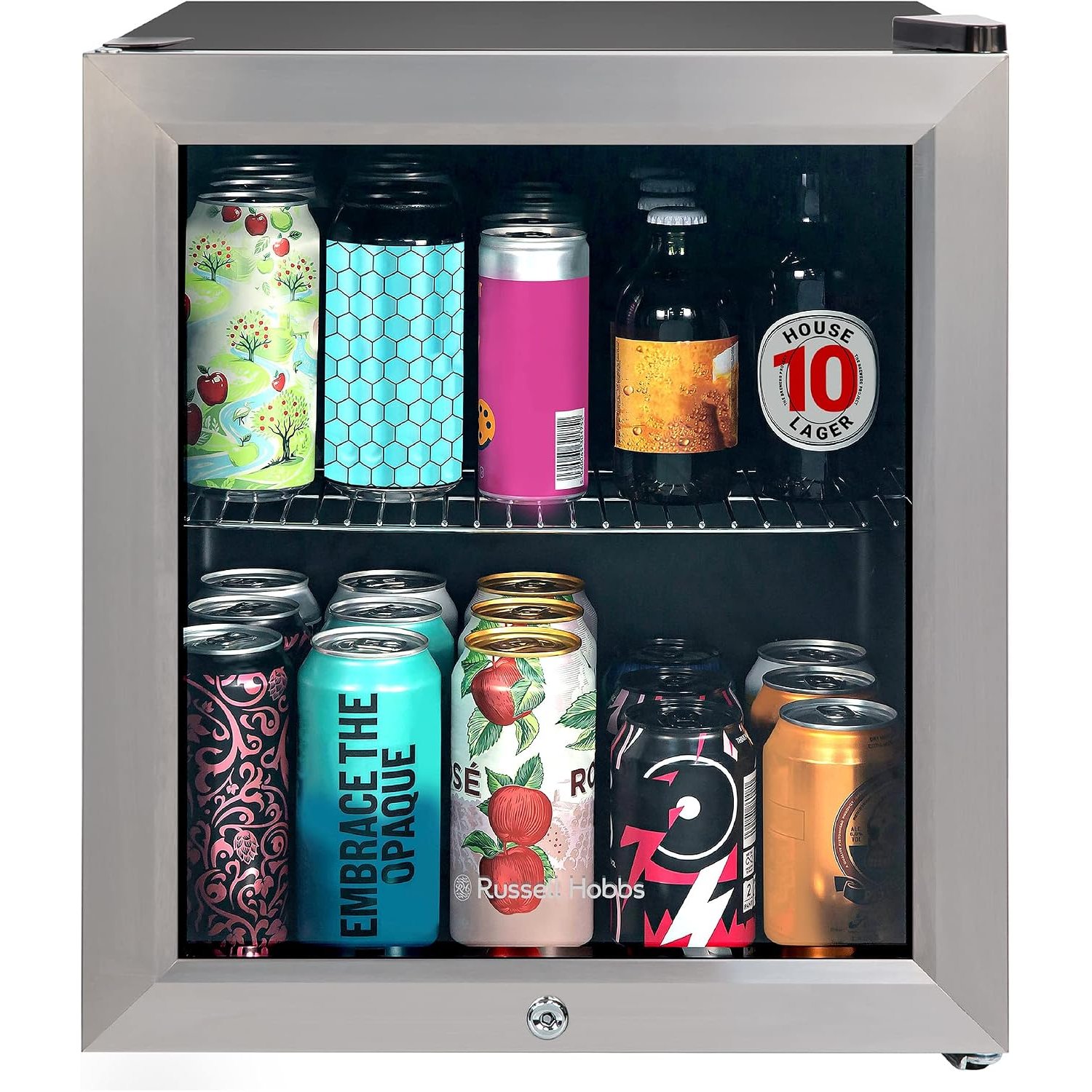
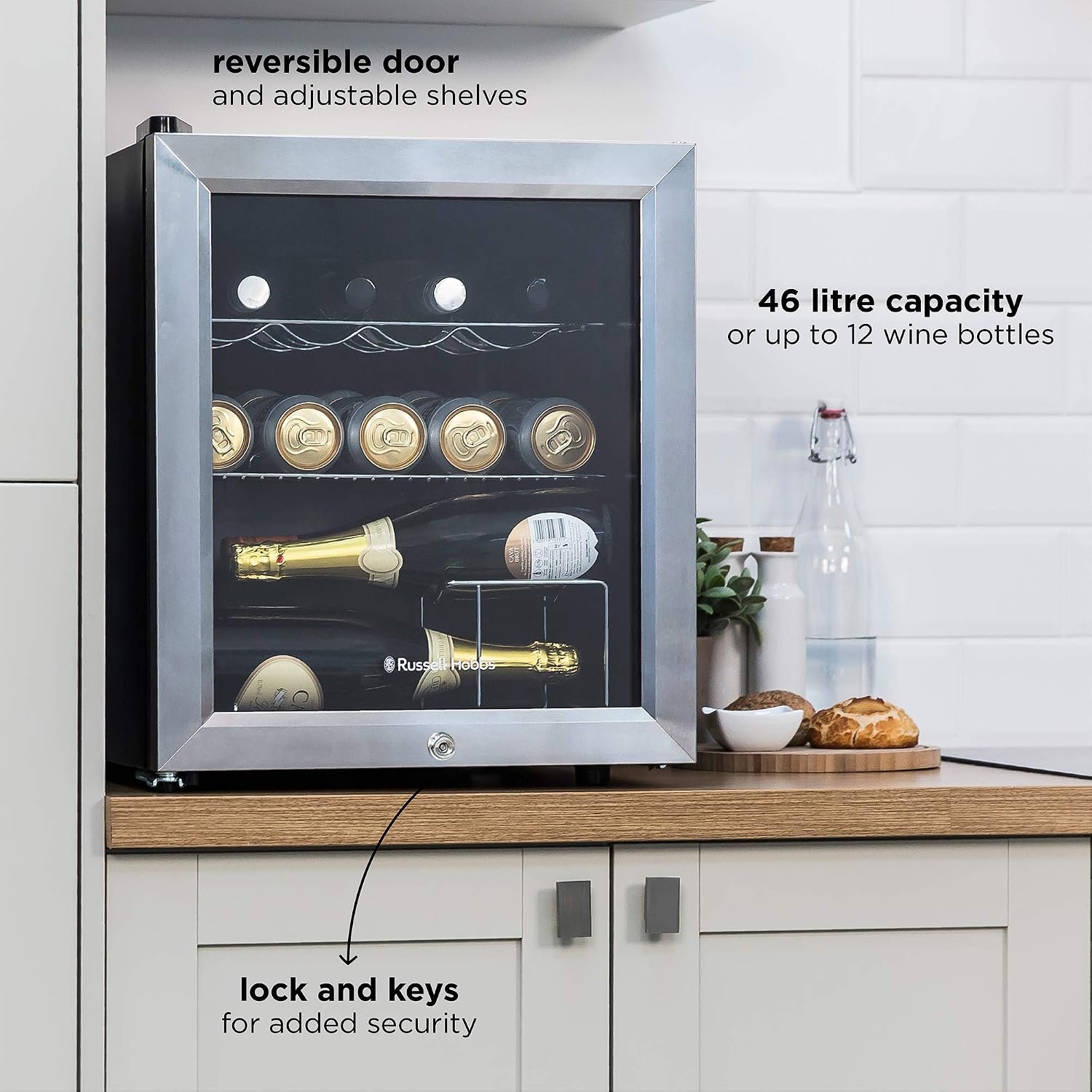
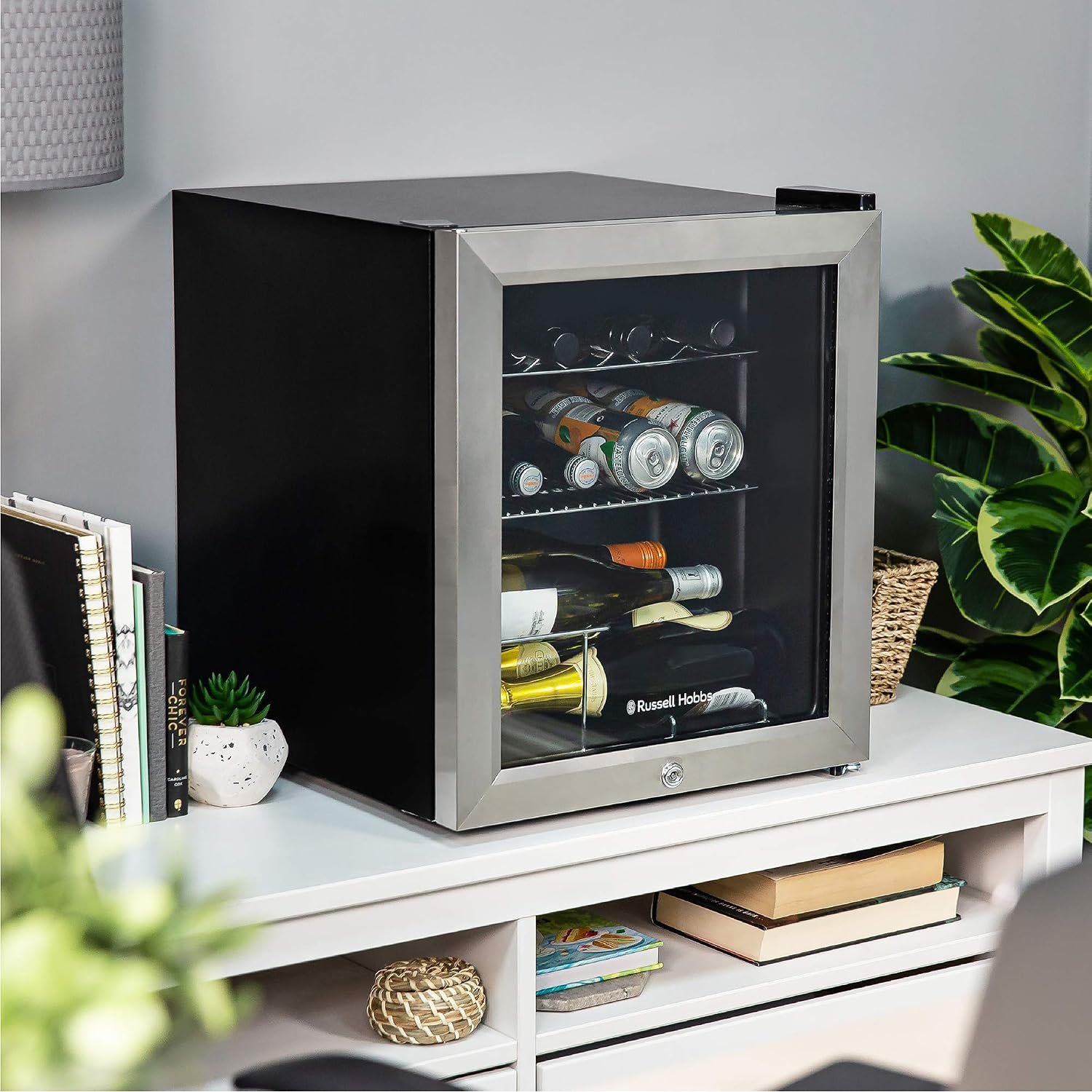
This 46 litre drinks cooler has a stated capacity of 12 bottles of 75cl or 38 cans of 330ml or 440ml. Those are alternative capacity figures, not amounts to add together. A mixed load will have its own practical limit.
Bottle shape matters too. A broad bottle takes up space differently from a narrow one, even when both hold the same volume. If your collection includes unusual shapes, leave some room in your expectations rather than planning around the maximum count.
For a household that buys a few favourites regularly, dedicated storage may be more useful than extra capacity alone. You can see what is left and keep drinks from competing with the evening meal for space.
Understand the temperature range
This adjustable temperature wine cooler has a listed range of 5°C to 18°C. That gives you a choice of cooling settings, but it also sets a clear limit. It is not a freezer, and it will not make ice.
Start with the serving temperature you prefer. If you want drinks colder than 5°C, this model's stated range will not meet that need. If you prefer some wines less cold, the upper part of the range may be more relevant to your choice.
Separate temperature zones are not specified by the maker. Treat this as a cooler with one chosen setting rather than expecting different sections for red wine, white wine and beer.
The maker's description also does not give cooling times or performance figures for different room temperatures. Follow the manual when setting up the appliance and allow for the manufacturer's instructions before loading or serving drinks.
Know what thermoelectric cooling tells you
The listed cooling method is thermoelectric. That identifies the type of cooling system, but it does not tell you every detail about everyday performance.
In particular, the maker does not provide a noise level. Do not assume a thermoelectric drinks cooler will be silent simply because of its cooling method. If it will sit beside a desk or near a bed, ask for noise information before ordering.
Likewise, there is no stated time for bringing a warm load down to the selected temperature. For entertaining, plan ahead rather than relying on an unverified rapid-cooling claim.
This is a freezerless mini fridge. That is a sensible match for dedicated drinks storage, but a different appliance may be needed if you also want frozen snacks or ice trays.
Measure the whole installation space
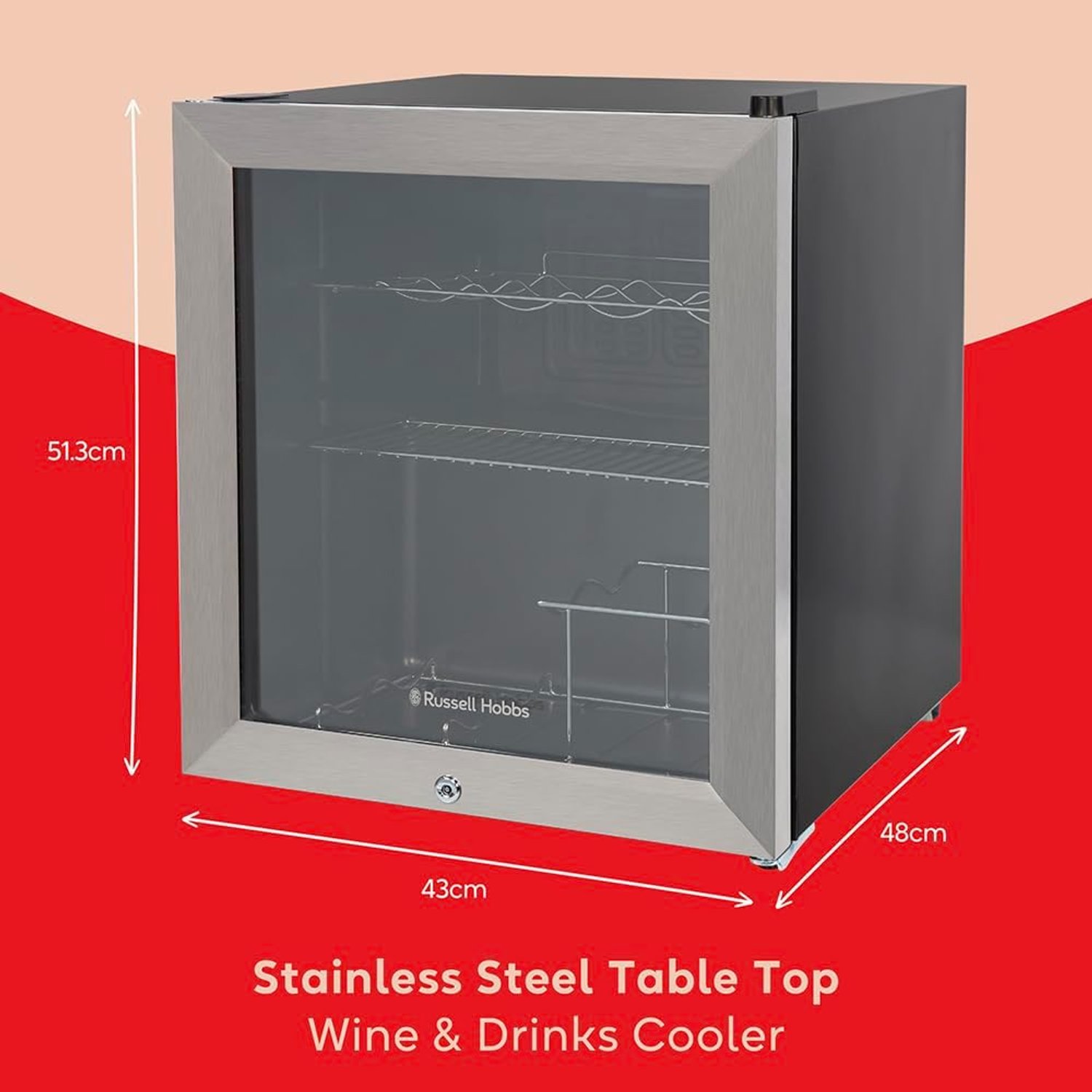
The listed external measurements are 43 cm deep, 48 cm wide and 51.3 cm high. Measure your intended position carefully, including any shelf above it and anything beside the door.
The cabinet dimensions are only part of the space needed. You must also allow for ventilation, the power connection and door movement. Exact clearance requirements are not given by the maker, so check the instruction manual before committing to a tight location.
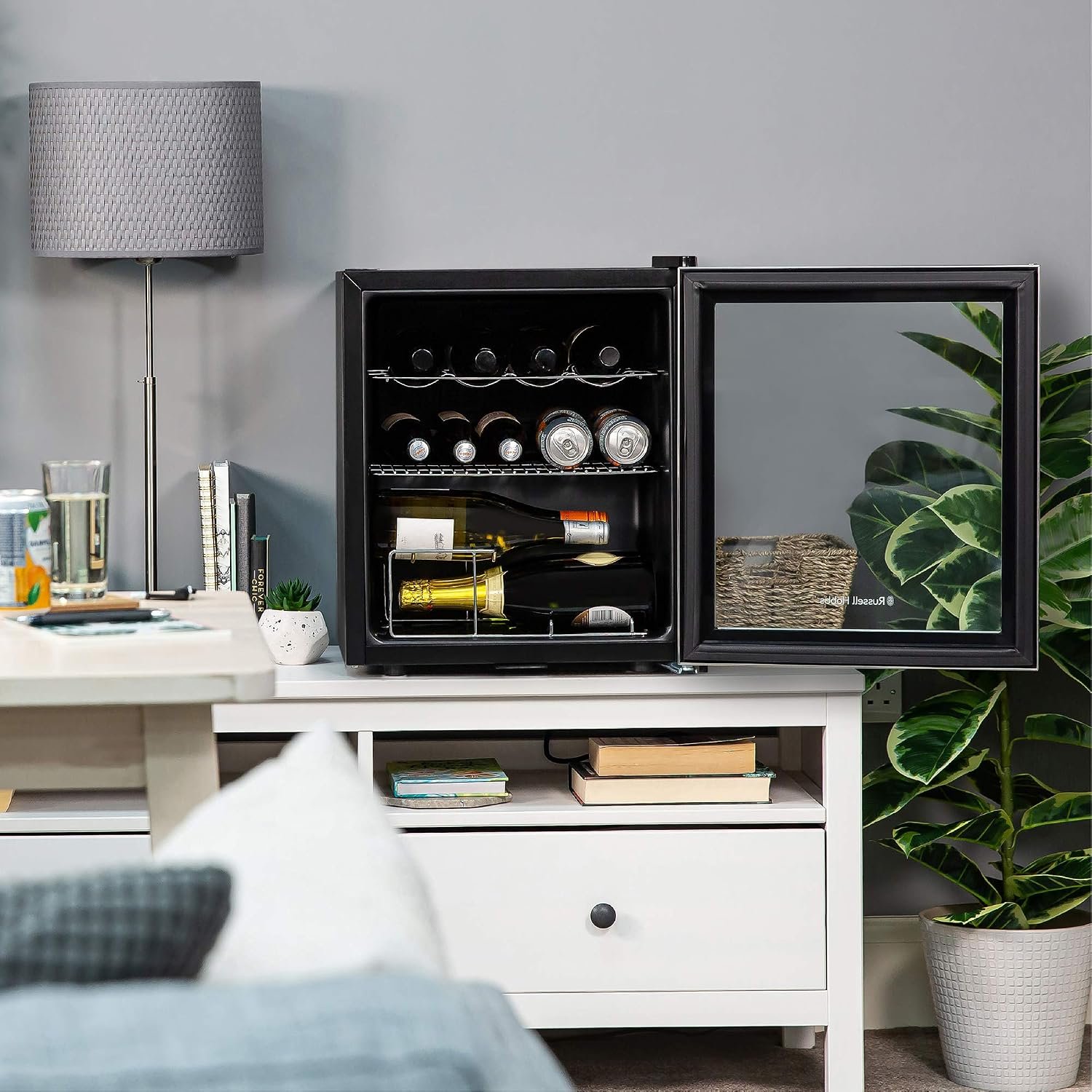
Installation is listed as countertop. A unit that physically fits under a counter is not automatically approved for enclosed use. Do not treat this model as a built-in appliance unless the manufacturer instructions say that placement is allowed.
It weighs 18.5 kg before drinks are added. Choose a stable surface that can carry the loaded appliance safely. Also consider how you will move it into position without dragging it across a delicate worktop.
Make the door work for your room
A reversible door can help when the most convenient position has a wall or another appliance on one side. It lets you plan the opening direction around the room rather than accepting an awkward reach.
Before changing the hinge arrangement, read the supplied instructions. The maker's description confirms that the door is reversible, but does not describe the procedure or required tools.
The glass front offers a simple everyday benefit. You can check the contents before opening the door, which is handy when several people are choosing drinks.
Think about the approach to the cooler as well as its footprint. A clear path and comfortable opening space make a compact appliance easier to use. A good fit on paper can still feel awkward if the door blocks a walkway.
Plan a sensible shelf arrangement
The specification lists wire shelving, three shelves, two racks and two door shelves. It does not fully explain how those separate counts relate to the interior arrangement.
If the exact shelf layout will decide your purchase, ask for confirmation rather than assuming each listed component represents a separate storage level. This is especially useful when you need to fit a particular bottle shape.
For everyday use, group similar containers where they are easy to reach. Avoid forcing bottles into a space or creating an unstable stack just to reach the stated capacity.
A 12 bottle wine cooler is most useful when the stored bottles remain easy to take out. Leaving a little flexibility can be worth more than filling every available gap, especially if your selection changes from week to week.
Decide whether a lock is useful
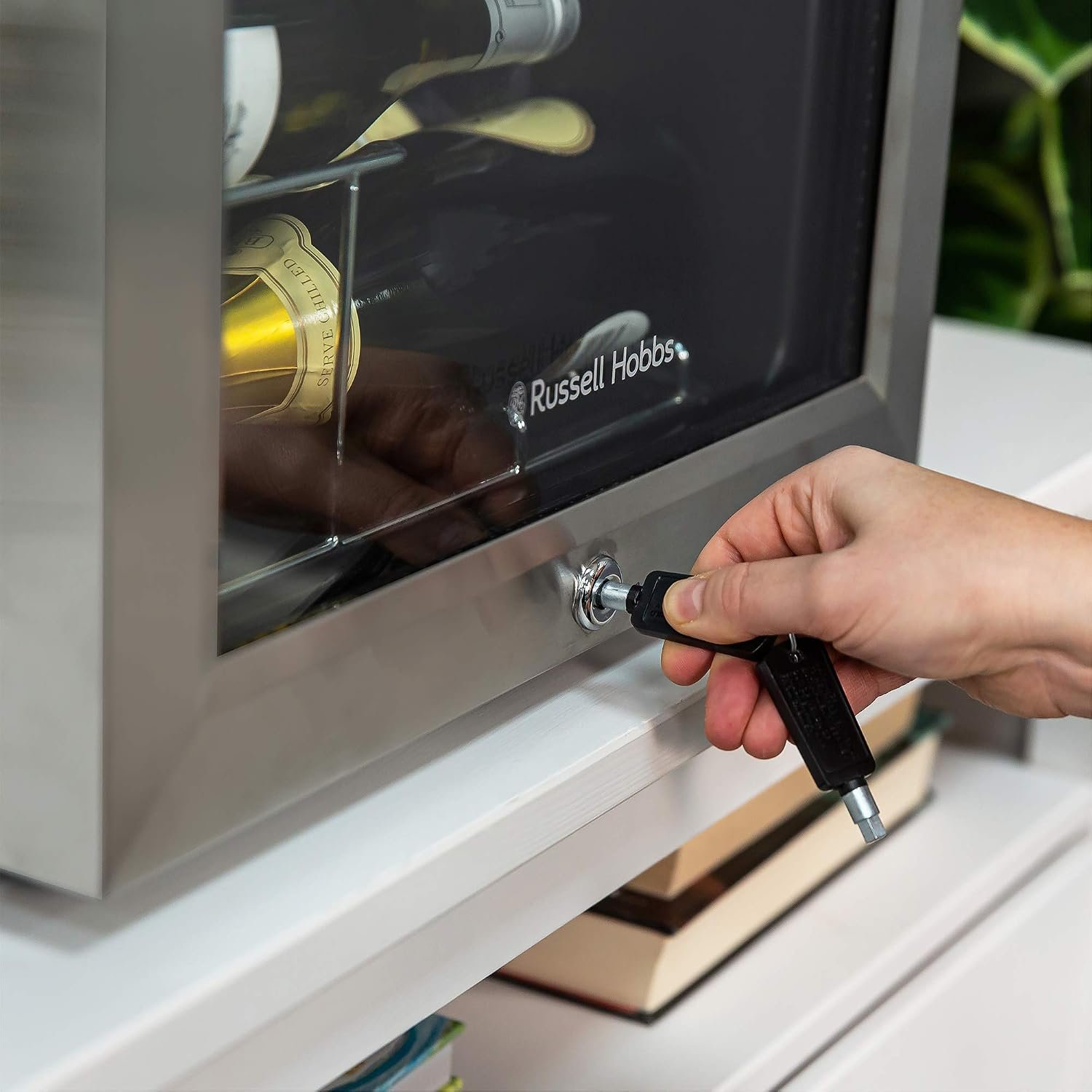
The key-operated lock gives you a way to control access to the contents. That may be useful in a shared home or when you want a particular collection kept separate.
A lockable drinks fridge still needs sensible handling. Keep keys somewhere appropriate and do not rely on an appliance lock as a substitute for supervision.
The maker does not specify the number of keys supplied or describe replacement-key arrangements. If those details matter for your household, confirm them before buying.
For some buyers, the lock will be an occasional feature. For others, it may be a main reason to choose this model. Either way, consider who will need access and where the keys will live.
Check the power supply before ordering
This mini fridge is listed as a corded 220 V appliance with a Type G plug.
Do not assume the plug or electrical requirements change to match your location. Check the supplied version and local compatibility before purchase. A plug adapter alone does not confirm that an appliance is suitable for a different electrical supply.
The listed annual energy consumption is 147 kWh. To estimate a yearly electricity cost, multiply that figure by your local price per kilowatt-hour. Treat the result as an estimate, since actual use can differ.
Plan the socket position before placing the cooler. Follow the manual for cable routing and electrical safety rather than stretching the cord to reach a distant outlet.
Match it to the right use
As a home bar fridge, this model offers separate drinks storage without a freezer compartment taking up part of the cabinet. The glass door also helps you keep track of the available selection.
It may suit a dining area or another suitable countertop position, provided the installation conditions are met. For a bedroom or quiet study, the missing noise figure deserves attention.
Do not assume it can replace a general food refrigerator. The stated minimum is 5°C, and the maker describes drinks storage. Perishable food, medicines and other temperature-sensitive goods need their own confirmed storage conditions.
If you are choosing a compact beer fridge, compare the temperature range with your preferences first. Capacity is only useful when the appliance can provide the conditions you want.
Keep cleaning and defrosting manageable
The defrost system is manual. Read the supplied instructions so you know when and how to defrost it safely, rather than waiting until a problem appears.
Unplug the cooler before cleaning. Use a soft cloth and an appropriate mild cleaner, keep water away from electrical parts, and avoid abrasive tools that could damage surfaces.
Never chip away ice with a knife or another sharp object. Follow the manual's defrosting method and drying instructions before returning the cooler to use.
Give the door seal and accessible ventilation openings regular attention. A glass door drinks fridge is easier to keep looking tidy when small spills and fingerprints are dealt with as they happen.
Check the last details before buying
Pay attention to the conditions for returns and what to do if the item arrives damaged or does not match expectations.
For a gift, confirm the recipient's space and electrical setup first. A thoughtful appliance gift still needs a suitable home.
The short version
Choose this mini fridge if you want dedicated 46-litre drinks storage, a glass door and a key lock, with adjustable cooling from 5°C to 18°C.
Measure carefully, confirm the 220 V Type G connection, and check the installation instructions. If those details fit your needs, this cooler offers a straightforward way to give bottles and cans their own space.